
Valve Applications
Multiple Valve Types
Multiple valve types from one manufacturer
Standards & Materials
International valve standards and material options
Project Support
Project-based selection and quotation support
Valve Solutions by Application
Water Supply
Valve solutions for municipal distribution, building services and transmission pipelines requiring reliable isolation and flow control.
Water Treatment
Valve solutions for filtration, disinfection and process-water pipelines in water treatment plants.
Wastewater
Valve solutions for wastewater collection and treatment systems handling suspended solids and demanding operating conditions.
HVAC Cooling
Valve solutions for chilled water, condenser water, cooling towers and data center cooling systems.
Pump Stations
Isolation, backflow protection and pipeline accessories for pump suction and discharge systems.
Fire Protection
Valve solutions for fire-water pipelines and pump rooms, selected according to project standards and approval requirements.
Marine
Material-specific valve solutions for ballast, seawater cooling and shipboard utility systems.
Industrial
Configurable valve solutions for process water, cooling water and general industrial pipelines.
VALVE SELECTION
Application-Based Valve Selection Guide
The following table provides preliminary valve recommendations for common water, HVAC, fire protection, marine and industrial pipeline applications. Final selection should be confirmed according to the medium, DN/NPS, PN/Class, temperature, material compatibility, connection, operating method and applicable project standards.
Swipe horizontally to view the complete table →
| Application | Primary Function | Typical Valve Options | Key Selection Factors |
|---|---|---|---|
| Municipal Water Transmission | Pipeline isolation | Resilient seated gate valve • Double-flanged butterfly valve | DN/NPS, PN/Class, buried or above-ground installation, protective coating, flange drilling and face-to-face standard |
| Water Treatment Processes | Isolation, backflow prevention and equipment protection | Butterfly valve • Válvula gaveta • Válvula de retenção • Y strainer | Process stage, medium, suspended solids, operating pressure, material compatibility and maintenance access |
| Wastewater Systems | Isolation and backflow prevention in solids-containing service | Resilient seated gate valve • Application-specific butterfly valve • Ball check valve • Swing check valve | Solids content, clogging risk, elastomer compatibility, installation direction and cleaning access |
| HVAC Chilled and Condenser Water | Isolation, automation and equipment protection | Válvula borboleta wafer • Lug butterfly valve • Silent check valve • Y strainer • Rubber expansion joint | Water or glycol concentration, temperature, pressure, insulation clearance, stem position and actuator requirements |
| Pump Suction and Discharge | Equipment isolation and backflow prevention | Válvula gaveta • Double-flanged butterfly valve • Silent check valve • Dual-plate check valve • Swing check valve | Flow rate, operating pressure, pump shutdown characteristics, installation orientation, potential water-hammer conditions and maintenance space |
| Fire Protection Pipelines | Approved isolation and backflow prevention | OS&Y or NRS gate valve • Grooved butterfly valve • Válvula de retenção | Required listing or approval, valve model and size, connection, supervision requirements and project specification |
| Marine Cooling and Ballast Systems | Isolation and backflow prevention | Material-specific butterfly valve • Válvula de retenção • Ball valve | Seawater compatibility, corrosion resistance, body and trim material, protective coating, seat material and marine approval requirements |
| Industrial Process-Water Pipelines | Isolation, regulation and equipment protection | Butterfly valve • Válvula gaveta • Ball valve • Control valve • Y strainer | Medium composition, concentration, temperature, pressure, operating frequency, connection and actuation method |
This guide supports preliminary valve screening. Final valve type, material, pressure rating, size, connection and certification must be confirmed against the actual operating conditions and project specification.
Need Help Selecting the Right Valve?
Send us your application, medium, DN/NPS, PN/Class, temperature, materials, connection, operating method, required standards and quantity.
Materials, Connections & Applicable Standards
Configurable options for different valve types, operating conditions and project specifications.
Materials & Sealing Options
Body materials
• Cast iron
• Ductile iron
• Carbon steel
• Stainless steel
Seat and sealing options
• EPDM
• NBR
• FKM
• PTFE
Connection Options
Connection types
• Wafer
• Lug
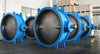
• Double flanged
• Grooved
Flange compatibility
• Drilling to applicable project standards
Applicable Standards
• API 609 — Butterfly valves
• API 598 — Inspection and testing
• MSS SP-67 — Butterfly valves
• EN 558 — Face-to-face dimensions
• AWWA C504 — Rubber-seated butterfly valves
• BS 5163 — Resilient seated gate valves
• EN 1074 — Valves for water supply
Recommended Valve Categories
Explore valve and pipeline accessory categories for water, HVAC, fire protection, marine and industrial applications.
Valve Application FAQs
Which valves are commonly used in water treatment plants?
Butterfly valves and gate valves are commonly used for pipeline isolation, while check valves prevent reverse flow. Y strainers can help protect pumps and downstream equipment from debris. Final selection depends on the process stage, medium, pressure and pipeline size.
How do I select a check valve for a pump station?
Consider the flow rate, operating pressure, pump shutdown characteristics, installation space and potential water hammer. Swing, tilting disc, dual plate and silent check valves have different closing characteristics, so the valve should be selected according to the hydraulic conditions.
Which butterfly valve is suitable for chilled water?
Resilient seated wafer or lug butterfly valves are commonly used in chilled-water systems. Selection should consider pressure, temperature, water or glycol concentration, insulation clearance, stem position and manual or actuated operation.
What information is required for valve selection?
Please provide the application, medium, concentration where applicable, DN/NPS, PN/Class, temperature, material, connection, operation method and quantity. Required standards, certifications, destination country and available drawings or datasheets are also helpful.

