 English
How To Know If a Valve Is Open or Closed
In any operating pipeline system, correctly identifying whether a valve is open or closed is a basic but essential part of daily operation and maintenance. While the task itself seems straightforward, different valve types use different structures and position indicators. Without a clear understanding of how a specific valve shows its status, misjudgment can easily occur and may affect process reliability or system safety.
This article looks at several common valve types, including butterfly valves, gate valves, and valves equipped with actuators. By focusing on visible indicators, structural features, and typical operating behavior, it explains practical ways to determine valve position in the field. These methods are intended as general guidance that can be applied reliably in everyday operating environments.
How to Tell If a Butterfly Valve Is Open or Closed
Identifying the position of a butterfly valve is relatively straightforward and is mainly based on the position of its operating device, such as the handle or actuator.
1. Lever-Operated Butterfly Valves
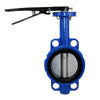
For lever-operated butterfly valves, position identification is usually straightforward because the valve stem and handle are directly connected. The handle position reflects the actual position of the disc inside the valve.
-
Open position:
When the handle is aligned parallel to the pipeline axis, the valve is in the open position. -
Closed position:
When the handle is perpendicular to the pipeline axis, the valve is closed.
Many lever handles are equipped with a locking plate or notched scale. The handle points to a series of marked positions that indicate intermediate opening angles. As the handle moves toward a larger marked value, the valve opening increases accordingly. These markings are intended as a visual reference for throttling or partial opening, rather than a precise flow measurement.

2.Gearbox-Operated Butterfly Valves
(Also known as worm gear butterfly valves)
This type of butterfly valve is opened and closed by turning the handwheel on the gearbox.
Observing the position indicator:
- Most gearboxes are equipped with a clear open/close indicator and pointer. When the pointer indicates “OPEN,” the valve is open. When it points to “SHUT,” “CLOSE,” or a closed mark, the valve is closed.
Feeling the handwheel rotation:
- When the valve is fully closed, the handwheel usually cannot be turned further clockwise and will feel tightened. When the valve is fully open, it may also stop turning counterclockwise. This method is not absolute and should be used only as a reference. The position indicator should be considered the primary basis for judgment.

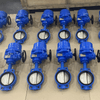
3.Actuator-Operated Butterfly Valves (Electric / Pneumatic)
Priority should be given to the visual indicator on the actuator, which usually clearly shows the “OPEN” or “SHUT” position.
For pneumatic actuators, the valve position can also be judged by the direction of the arrow on the top of the actuator. When the arrow is parallel to the pipeline, the valve is open; when it is perpendicular, the valve is closed.
For pneumatic valves equipped with a limit switch box, the transparent window indicator should be used as the final confirmation, where green indicates open and red indicates closed.

How to Tell If a Gate Valve Is Open or Closed
(Typically handwheel operated)

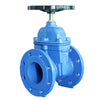
Gate valves are opened and closed by rotating the handwheel, which drives the stem to move up or down and lifts or lowers the gate. Position identification is mainly based on the exposed length of the stem and the feeling of handwheel rotation.
Rising Stem Gate Valves (Easiest to Identify)
In rising stem gate valves, the stem threads are located outside the valve body. During operation, the stem visibly moves up or down.
-
Open position:
A large portion of the stem threads is exposed, and the stem rises to its highest position. The top of the stem is clearly above the handwheel. -
Closed position:
The stem threads are almost completely retracted, with only a small portion visible or no threads visible at all. The top of the stem is close to or below the handwheel.
Non-Rising Stem Gate Valves
In non-rising stem gate valves, the stem threads are located inside the valve body. During operation, the stem does not move up or down. Only the handwheel rotates, and the threaded stem nut (connected to the gate) moves internally. From the outside, the stem position remains unchanged.
The valve position cannot be determined by observing the stem.
Identification mainly relies on the number of handwheel turns. It is necessary to know how many turns are required to move the valve from fully closed to fully open. Typically, when fully closed, the handwheel cannot be turned further clockwise; when fully open, it cannot be turned further counterclockwise. Markings can be made on the handwheel or valve body to record the valve position.
Some non-rising stem gate valves are equipped with a pointer and scale on the bonnet or stem nut to indicate the open or closed position.

Common Supporting Methods for Valve Position Identification
Handwheel turning feel:
When the valve is fully closed, a clear tightening resistance is usually felt. Excessive force should be avoided to prevent damage to the sealing surfaces.
When the valve is fully open, resistance may also be felt as the gate reaches the upper end of its travel.
Other Ways to Identify Valve Position
(Supplementary but still important)
Judging by pressure changes:
When a pressure gauge is installed on the pipeline, valve position can be inferred from pressure behavior.
-
After closing the valve:
Downstream pressure will gradually decrease or remain stable. -
After opening the valve:
Downstream pressure will increase and approach the upstream pressure.
Notes and Limitations
- Applicable to pressurized systems only; not suitable for non-pressurized pipelines.
- Pressure changes cannot indicate whether a valve is fully in position. They only show whether flow is present or blocked.
Judging by Flow Rate or Flow Velocity
In large-scale systems, flow meters are often used as an auxiliary method to identify valve position.
-
Valve open:
Flow rate increases noticeably. -
Valve closed:
Flow rate approaches zero. -
Partially open:
Flow rate remains at an intermediate value.
Typical Applications
- Water treatment plants
- Industrial automation pipelines
- Circulating pump systems

General Safety Principles
-
Observe first:
Always start by checking the valve’s mechanical indicators, such as handle direction, position pointer, or stem height. These are the most reliable references. -
Do not rely on pipe temperature or pressure:
A hot pipe or the presence of pressure does not necessarily mean the valve is open. An isolated pipe section upstream of a closed valve may still retain residual pressure or heat. -
Confirm after operation:
For critical valves, always recheck the indicated position after operation to ensure it matches the intended state. -
Use tagging and labeling:
In industrial installations, important valves should be clearly tagged with “OPEN” or “CLOSED” status labels. This is one of the most effective management practices to prevent misoperation.
When in doubt, treat as closed and report:
If the valve position cannot be clearly identified and safety or process isolation is involved, the valve should be treated as closed. Any required operation should be subject to a higher level of safety confirmation, and responsible personnel should be notified for professional inspection. Never operate blindly.
Determining whether a valve is open or closed may appear simple, but in practice it requires a combined assessment of indicators, stem position, travel signals, and operating conditions, especially across different valve designs and actuation methods. A proper understanding of these methods helps reduce misjudgment, improve operational safety, and maintain stable system operation.
Union Valve has long supplied butterfly valves and gate valves for water treatment, HVAC, and industrial piping systems. If you need further support with valve selection or assistance in choosing the right valve and actuator combination for your operating conditions, our team can provide practical recommendations and proven engineering solutions to help improve system safety and long-term reliability, please contact us.
FAQ
Is a butterfly valve open when the handle is parallel to the pipe?
Yes. For most lever-operated butterfly valves, a handle parallel to the pipeline usually indicates that the valve is open, while a handle perpendicular to the pipeline usually indicates that it is closed.
How do you tell if a gate valve is open or closed?
For a rising stem gate valve, a raised stem usually indicates that the valve is open, while a lowered stem indicates that it is closed. For a non-rising stem gate valve, check the position indicator or the number of handwheel turns from the fully closed position.
Related Articles:
-
Posted in
Valve Basics, Valve Maintenance, Valve Operation