 English
Sluice Valve vs Gate Valve: Key Differences and Applications
If you’ve ever searched for “Sluice Valve vs Gate Valve,” you’ve probably noticed that different websites give different explanations—sometimes even suggesting they are two distinct types of valves. In reality, for the vast majority of engineering and water utility applications, sluice valve and gate valve refer to the same basic valve design. The difference lies mainly in industry usage and historical naming conventions, rather than in structural design or functional performance.
This article aims to clarify the terminology and help you choose the most suitable valve for your project.
Why are there two different names?
Sluice Valve (commonly used in the water sector)
The word “sluice” originally refers to a water gate or a device used to control the flow of water.
In water supply, irrigation, and municipal water and wastewater systems, this term has long been used to describe a gate-type valve designed for full isolation of flow. It is especially common in Commonwealth countries and within water utility networks.
Gate Valve (general industrial term)
The term “gate valve” directly describes the valve’s fundamental operating principle:
a gate or wedge that moves up and down perpendicular to the flow direction to open or shut off the fluid passage. This name is more widely used in industrial standards, technical documentation, and cross-industry applications.
In practice, both terms describe the same type of valve. Which term is used usually depends on regional preference or industry context, with “sluice valve” being particularly common in water and pipeline applications.

Key Features of Sluice /Gate Valves for Water Systems
Our sluice (gate) valves are designed for reliable pipeline isolation and offer the following key features:
1.Full-bore design
When fully open, the gate is completely withdrawn from the flow path, allowing the medium to pass through in an almost straight line with minimal pressure loss. This is especially important in long-distance water transmission and main pipeline systems.
2.Bidirectional sealing
The valve can provide tight shut-off in either flow direction, improving operational flexibility in complex pipeline networks.
3.Optional stem configurations
- Rising stem (OS&Y): The stem rises as the valve opens, allowing the open/closed position to be clearly visible. This design is well suited for above-ground installations where visual indication of valve status is required.
- Non-rising stem (NRS): The stem rotates without axial movement, making it ideal for underground installations or locations with limited vertical clearance.
4.Robust construction
Valve bodies are typically manufactured from ductile iron, cast iron, or cast steel (such as ASTM A126 / A216 WCB), providing excellent corrosion resistance and a long service life in water supply applications.
5.Soft-seated or metal-seated gate options
- Resilient-seated gates (e.g., rubber-encapsulated wedge): Ideal for potable water systems, offering superior sealing performance.
- Metal-seated gates: Suitable for higher-temperature service or special operating conditions.
6.Standardized end connections
Most valves are supplied with flanged ends in accordance with EN, DIN, or ASME standards. Mechanical joint (MJ) connections are also available, allowing for easier installation and maintenance.

Why are gate valves preferred in water systems?
1.Excellent isolation performanc
When fully closed, gate valves provide very tight shut-off, which is critical for pipeline maintenance, sectional isolation, and emergency shut-down of water lines.
2.Low flow resistance
Thanks to their full-port design, gate valves minimize energy losses in pumping systems. This is essential for achieving efficient and economical water transmission.
3.Simple structure and long service life
Gate valves feature a straightforward and robust design with fewer wearing components compared to many other valve types. This reduces lifecycle costs, particularly in high-pressure water pipelines.
4.Wide range of applications
From standard PN10 / PN16 water networks to higher pressure ratings and large-diameter transmission projects, gate valves can cover a broad spectrum of operating conditions.
5.High cost-effectiveness
For pipe sizes DN300 and above, gate valves are often the most cost-efficient solution for achieving reliable isolation.
Sluice Valves Compared with Other Common Water Valves
While “sluice valve vs gate valve” is not a meaningful comparison, it is important to understand how sluice (gate) valves differ from other common valve types used in water systems.
Sluice / Gate Valve vs Butterfly Valve
- Sluice (gate) valve:
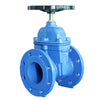
Gate valves offer superior shut-off performance, lower flow resistance, and better suitability for high-pressure trunk pipelines. However, they are relatively bulky and have slower opening and closing speeds.
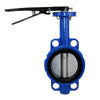
Butterfly valves are compact and allow fast operation, making them well suited for frequent operation or installations with limited space. That said, even when fully open, some pressure loss remains due to the disc staying in the flow path.
In practice, sluice (gate) valves are typically used at critical isolation points, on high-pressure main pipelines, and in applications where minimizing pressure loss is a key requirement.
Sluice / Gate Valve vs Ball Valve
In large-diameter pipelines, gate valves are generally more cost-effective than ball valves and are better suited for water media containing small amounts of suspended solids. Ball valves, on the other hand, perform best in smaller sizes and in applications requiring rapid open–close operation.

How to Select the Right Gate Valve for a Water Supply System
During the engineering and selection stage, the following factors should be carefully considered:
- Pressure rating (PN / Class): Match the system’s maximum operating pressure with an appropriate safety margin.
- Valve size (DN / NPS): Ensure compatibility with the pipeline diameter.
- Material configuration: The materials of the valve body, stem, gate, and seat should be suitable for the water quality and surrounding environment.
- End connection: Choose flanged ends, mechanical joints, or other connection standards based on installation requirements.
- Stem design: Select a rising stem or non-rising stem according to the installation conditions.
- Operating method: Handwheel, gearbox, or actuator, depending on valve size and operating needs.
- Applicable standards: Such as EN 1074, AWWA C509 / C515, ISO 5208, and other relevant specifications.
Union Valve: Your Reliable Partner for Water Control Solutions
At Union Valve, we specialize in the design and manufacture of valves for water and municipal applications. Our gate valves are manufactured in compliance with EN, ISO, and related standards, and are widely used in:
- Municipal water supply and distribution networks
- Wastewater treatment plants and collection systems
- Irrigation and agricultural water projects
- Pump stations, reservoirs, and industrial water pipelines
Beyond supplying valves, we work closely with real operating conditions during the selection process, helping projects achieve the right balance between reliability, service life, and total operating cost.
Whether you call it a sluice valve or a gate valve, Union Valve delivers stable and dependable solutions for your water supply systems.Feel free to contact us anytime.
Related Articles:
- Gate Valve Types and Selection: A Detailed Guide
- Gate and Check Valves: Clear Comparison Guide
- Why Gate Valves Leak and How to Fix It
- What Is The Difference Between Wedge-Type Gate Valve And Slab Gate Valve?
- Characteristics of Resilient Seated Gate Valve and Their Differences from Metal Sealing Gate Valves
-
Posted in
Gate Valve, Sluice Valve, Valve Comparison, Water System