 English
Butterfly Valve vs Ball Valve: Key Differences and How to Choose
Butterfly valves and ball valves are both commonly used shut-off valves in pipeline systems. Because they serve similar functions and can both be used to control the on-off flow of fluids, they are often compared with each other in many engineering projects.
However, there are clear differences between butterfly valves and ball valves in terms of structural design and operating characteristics. These differences directly affect how each valve performs under various conditions, such as pipe size, system pressure, installation space, and operational requirements. For this reason, engineers typically evaluate these factors carefully when deciding which type of valve is more suitable for a specific application.
Butterfly Valve Structure
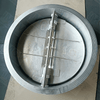
A butterfly valve controls fluid flow by rotating a circular disc inside the valve body. The disc is positioned at the center of the pipeline and is connected to a stem, which drives the rotation to open or close the valve.
Working Principle:
When the disc rotates about 90 degrees, the valve moves from a fully open position to a fully closed position.
- Disc parallel to the flow → Valve open
- Disc perpendicular to the flow path → Valve closed
Because the disc remains inside the flow path, the fluid must flow around it even when the valve is fully open.

Ball Valve Structure
A ball valve controls the flow of fluid by rotating a ball with a through hole inside the valve body. As the ball rotates with the stem, the position of the hole changes, allowing the pipeline to be opened or closed.
When the valve is fully open, the hole inside the ball aligns with the pipeline, creating a nearly straight flow path. This allows fluid to pass through the valve with relatively little resistance.

Butterfly Valve vs Ball Valve: Key Differences
Because of their different structural designs, butterfly valves and ball valves differ in several performance aspects:
|
Feature |
||
|
Flow control element |
Disc |
Ball |
|
Pressure drop |
Slightly higher |
Very low |
|
Sealing performance |
Good |
Excellent |
|
Installation space |
Compact |
Larger |
|
Weight |
Lighter |
Heavier |
|
Cost in large sizes |
Lower |
Higher |
|
Typical size range |
Medium to very large |
Small to medium |
Pressure Drop Comparison
- Ball valve: When fully open, the bore inside the ball aligns with the pipeline, creating a nearly straight flow path. This allows fluid to pass through the valve smoothly, resulting in relatively low pressure loss.
- Butterfly valve: When open, the disc remains positioned inside the pipeline. As the fluid passes through, it must flow around the disc, which creates slightly higher flow resistance.
However, in many municipal water systems, HVAC applications, and general industrial pipelines, this difference in pressure loss is usually acceptable. For this reason, butterfly valves are still widely used in medium- to large-diameter pipelines.
Flow Control Comparison
- Ball valve: Standard ball valves are mainly designed for on-off service. When operated in a partially open position for extended periods, high flow velocity around the ball and seat may cause uneven wear.
- Butterfly valve: The disc can be positioned at different opening angles to regulate the amount of fluid passing through the valve. This makes butterfly valves suitable for general flow regulation in water, HVAC, and other pipeline systems.
For this reason, butterfly valves are generally more suitable for general throttling applications, while standard ball valves are mainly used for fully open or fully closed service. For more precise flow control, special ball valve designs such as V-port ball valves can be used.
Sealing Performance Comparison
- Ball valve: Sealing is achieved through the circular contact between the ball and the valve seat. When the valve closes, the ball rotates and presses against the seat, forming a continuous sealing surface that typically provides reliable shut-off.
- Butterfly valve: Sealing is achieved through the contact between the disc and the valve seat. With improvements in seat materials and structural design, modern butterfly valves can also provide reliable sealing performance in water supply, HVAC, and general industrial pipeline systems.

Installation Space and Weight
- Butterfly valve: The structure is more compact and the overall weight is relatively lighter. As pipe size increases, this advantage becomes even more noticeable, making butterfly valves easier to install and maintain in medium to large pipeline systems.
- Ball valve: The structure is generally larger and heavier. In large sizes, both the valve body and the internal ball become significantly bigger, which can increase transportation and installation difficulty and may require more installation space.
For this reason, butterfly valves are often the more practical choice in large pipeline systems or in installations where space is limited.
Cost Comparison
Valve cost is often related to structural complexity and pipe size.
- Butterfly valve: The structure is relatively simple, with fewer internal components, so manufacturing costs are usually lower. As pipe diameter increases, this cost advantage becomes more noticeable, making butterfly valves a more economical option for medium to large pipeline systems.
- Ball valve: The structure is generally more complex, requiring the machining of the ball, valve seats, and a thicker valve body. As the valve size increases, both the ball and the valve body become significantly larger, which typically leads to higher manufacturing costs.
For this reason, butterfly valves are often the more economical choice in large-diameter pipeline systems, while ball valves are more commonly used in smaller pipe sizes or in applications where tighter sealing is required.

When to Choose a Butterfly Valve
When compact structure, ease of installation, and cost control are key considerations, a butterfly valve is often the more suitable choice.
A butterfly valve is typically preferred in the following situations:
- Large-diameter pipeline systems
- Municipal water supply and wastewater treatment systems
- HVAC and cooling water systems
- Pipelines with limited installation space
- Projects where cost control is an important factor
When to Choose a Ball Valve
When a pipeline system requires reliable sealing, low flow resistance, or operates under higher pressure, a ball valve is often the more suitable choice.
A ball valve is typically preferred in the following situations:
- Systems requiring reliable shut-off
- Pipelines where low pressure drop is important
- High-pressure pipeline systems
- Small to medium pipe sizes
- Oil and gas or other industrial process systems
FAQ
Is a ball valve better than a butterfly valve?
There is no valve type that is universally better. Ball valves offer advantages such as reliable sealing and lower pressure drop, so they are often used in systems where tight shut-off or higher pressure conditions are required. Butterfly valves, on the other hand, have a more compact structure and lighter weight. They are usually more economical in large-diameter pipeline systems and are widely used in water supply networks and large pipeline projects.
Do butterfly valves cause pressure loss?
Yes, butterfly valves can create some pressure loss even when fully open. This is because the disc remains inside the flow path, so the fluid must flow around it. However, in most water supply systems and HVAC applications, this pressure loss is generally within an acceptable range.
Which valve is better for large pipelines?
Butterfly valves are usually more practical for large-diameter pipelines because they are lighter, more compact, and generally more economical than ball valves of the same size.
Summarize
In summary, butterfly valves and ball valves differ significantly in both structure and performance. Ball valves typically offer better sealing and lower pressure drop, while butterfly valves have a more compact design, lighter weight, and better cost efficiency in medium- to large-diameter pipelines. Therefore, in practical engineering applications, valve selection should be based on factors such as pipe size, system pressure, and installation conditions.
Union Valve specializes in the design and manufacture of butterfly valves, providing reliable solutions for municipal water supply, wastewater treatment, HVAC, and industrial pipeline systems. If you are looking for butterfly valves suitable for water systems or large pipeline projects, feel free to contact Union Valve for more product information and technical support.
Related Articles:
- Difference Between O-type Ball Valve And V-notch Ball Valve
- Butterfly Valve vs Gate Valve: Key Differences and Selection Guide
- Gate and Check Valves: Clear Comparison Guide


-
Posted in
Ball Valve, Butterfly Valve, Valve Comparison, Valve Selection