 English
How Does a Butterfly Valve Work
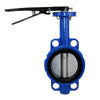
A butterfly valve is a common industrial valve used to control the opening, closing, and flow regulation of fluid by rotating a disc inside the valve body. When the stem rotates the disc by 90 degrees, the valve can move from fully open to fully closed, which is why butterfly valves are also known as quarter-turn valves.
Compared with gate valves and ball valves, butterfly valves are usually more compact, lighter in weight, and require less installation space, especially in large-diameter piping systems. Because of these advantages, butterfly valves are widely used in HVAC systems, water treatment plants, cooling towers, industrial circulating water systems, and data center cooling systems.
What Is the Basic Working Principle of a Butterfly Valve?
The basic working principle of a butterfly valve is to control or shut off fluid flow by rotating a disc inside the pipeline.
Inside the valve, a circular disc is connected to a stem and operated by a handle, gearbox, or actuator. When the stem rotates, it turns the disc:
- When the disc is parallel to the flow direction, the valve is fully open.
- When the disc is perpendicular to the flow direction, the valve is fully closed.
Butterfly valves can also control flow by partially opening the disc at different angles. Because of this, they are widely used in HVAC systems, water treatment systems, and cooling applications.
How Does a Butterfly Valve Open and Close?
A butterfly valve opens and closes by rotating the valve disc inside the pipeline. As the disc angle changes, the flow area also changes, allowing the valve to control fluid flow.
Fully Open Position
When the disc is nearly parallel to the flow direction, the valve is fully open and fluid can pass through with relatively low flow resistance.
However, because the disc still remains inside the pipeline, butterfly valves usually create slightly more resistance than gate valves.
Partially Open Position
When the disc is partially open, the butterfly valve can regulate flow.
A smaller opening angle reduces the flow area and decreases the flow rate. This is why butterfly valves are widely used for flow control in HVAC systems, cooling systems, and industrial pipelines.
However, operating at a small opening angle for long periods may increase seat wear and may cause vibration or cavitation in some conditions.
Fully Closed Position
When the disc rotates perpendicular to the flow direction, the valve is fully closed.
The disc presses tightly against the seat to stop fluid flow.
.

How Does a Butterfly Valve Seal?
The sealing principle of a butterfly valve is based on the contact between the disc and the seat. When the valve closes, the disc rotates into the shut-off position and presses against the seat to block fluid from passing through the pipeline.
Butterfly valve sealing designs are generally divided into two main types: soft sealing and metal sealing.
Soft-Seated Butterfly Valves
Soft-seated butterfly valves typically use elastic seat materials such as EPDM, NBR, or PTFE.
When the disc closes, the seat slightly deforms to create a tight seal between the disc and the seat surface.
These butterfly valves are commonly used in:
- Water treatment systems
- HVAC systems
- Normal-temperature and low-pressure applications
They are capable of achieving very low leakage rates and, in many cases, bubble-tight sealing performance.
Metal Seated Butterfly Valves
Metal seated butterfly valves made by die casting, cast iron and other process, which are mainly used in high-temperature, high-pressure, or highly corrosive applications.
Unlike soft-seated designs, metal seated butterfly valves rely on precise metal-to-metal contact to achieve sealing. Because of this, they require higher machining accuracy and more advanced structural design.
The sealing performance of a butterfly valve is influenced not only by the seat material, but also by factors such as:
- Pressure
- Temperature
- Media type
- Valve structure design
For this reason, selecting the appropriate butterfly valve design and sealing material is extremely important in actual engineering applications.
How Do Different Butterfly Valve Types Work?
Although the basic working principle of butterfly valves is generally similar, different types of butterfly valves still have differences in structure and operating methods.
Concentric Butterfly Valve
The concentric butterfly valve is the most common butterfly valve design.
In this structure, the stem is positioned at the center of the disc, and the disc presses directly against the seat to achieve sealing when the valve closes.
Most soft-seated butterfly valves use a concentric design.
Double Offset Butterfly Valve
The two offsets of a double offset butterfly valve are:
- The stem is offset from the disc center
- The stem is offset from the pipeline center
This design allows the disc to move away from the seat more quickly during opening, helping reduce friction and wear.


Compared with concentric butterfly valves, double offset designs are generally more suitable for:
- Large-diameter pipelines
- Higher-pressure systems
- Applications with frequent operation
They are widely used in industrial piping systems, water plants, and large HVAC systems.
Triple Offset Butterfly Valve
The triple offset butterfly valve is a further improvement based on the double offset design.
With the addition of a special third offset angle, the disc gradually contacts the seat during closing instead of rubbing directly against it.
This design significantly reduces wear and is especially suitable for metal seated butterfly valves used in severe service conditions.

Compared with standard soft-seated butterfly valves, triple offset butterfly valves usually offer:
- Higher temperature resistance
- Longer service life
- Better performance under demanding conditions
However, they also require higher manufacturing precision and generally have higher production costs.
How Do Butterfly Valve Actuators Work?
The purpose of an actuator is simply to help operate the butterfly valve by opening and closing it.
When the actuator rotates the stem, the internal disc rotates at the same time, controlling whether fluid can pass through the pipeline.
Depending on the driving method, butterfly valves are commonly operated in three ways: manual, electric, and pneumatic.
Manual Operation
Manual butterfly valves are typically operated using a handle or gearbox.
This operating method has a simple structure and is commonly used in general industrial pipelines and smaller piping systems.
Electric Operation
Electric butterfly valves use an electric motor to drive the valve operation, allowing automatic control and remote operation.
Some electric actuators can also be connected to PLC or SCADA systems for remote monitoring and automatic control.
Pneumatic Operation
Pneumatic butterfly valves use compressed air to open and close the valve.
Compared with electric actuators, pneumatic actuators usually provide faster operating speed, making them common in industrial systems that require frequent valve operation.

Where Are Butterfly Valves Commonly Used?
Because of their compact structure, lighter weight, and suitability for large-diameter pipelines, butterfly valves are widely used in many industrial and building systems.
HVAC Systems
Butterfly valves are commonly used in chilled water and cooling water pipelines to control water flow shut-off and basic flow regulation.
Compared with larger gate valves, butterfly valves require less installation space, making them especially suitable for large HVAC circulation systems.
Cooling Tower Systems
In cooling water circulation pipelines, butterfly valves are a common choice for large-diameter piping systems.
Their lighter weight, easier installation, and flexible operation provide clear advantages in cooling tower applications.
Water Treatment and Wastewater Systems
Butterfly valves are widely used in:
- Raw water transmission systems
- Filtration systems
- Circulating water systems
- Drainage pipelines
Soft-seated butterfly valves are especially common in these applications because of their reliable sealing performance and cost efficiency.
Data Center Cooling Systems
With the rapid growth of AI data centers and high-density computing, butterfly valves are being used more frequently in data center cooling systems.
Large cooling water systems often require a significant number of butterfly valves to control chilled water and cooling water circulation, helping maintain stable system operation.
Other Industrial Applications
In addition, butterfly valves are also widely used in:
- Industrial piping systems
- Fire protection systems
- Chemical processing systems
- Certain seawater and circulating water applications
Their compact design and efficient operation make them suitable for many different fluid control applications.

From traditional HVAC, water treatment, and cooling systems to modern AI data center cooling applications, butterfly valves are widely used for fluid control because of their compact design, simple operation, and suitability for large-diameter pipelines.
Understanding how butterfly valves work and the differences between various designs helps engineers and buyers choose the right valve type and actuator for different operating conditions.
As a professional industrial valve manufacturer, Union Valve supplies a wide range of butterfly valves for various applications, widely used in industrial fluid systems across different industries. If you have any further questions, feel free to contact us anytime.
Related Articles:
- How to Select Butterfly Valves for Chilled Water Systems
- What Valves Are Used in HVAC Cooling Systems
- What Valves Are Used in AI Data Center Cooling Systems
- Soft-Seated vs Metal-Seated Butterfly Valves: Differences and Selection Guide
- Types of Valves Commonly Used in Wastewater Treatment
- Functions and Features of Different Butterfly Valve Actuators
- Unlocking Valve Efficiency: Concentric, Double, and Triple Eccentric Butterfly Valves Explained