 English
What Valves Are Used in HVAC Cooling Systems
In commercial buildings, industrial facilities, and data centers, equipment continuously generates heat during operation. If this heat is not removed in time, it can affect system performance and even lead to equipment failure. Therefore, HVAC cooling systems are essential infrastructure for maintaining stable operation.
Most HVAC cooling systems dissipate heat through chilled water circulation. Water flows continuously through the piping, carrying heat away and completing the cooling process. In this process, valves play a critical role in controlling flow, isolating pipelines, and protecting equipment, making them an indispensable part of the system.
Because different installation locations require different functions, HVAC systems typically use a combination of various valves. This article will briefly introduce the common valve types and their applications in the system.

Why HVAC Cooling Systems Need Valves
In HVAC cooling systems, water must circulate continuously through the piping and be distributed according to the needs of different areas. This process is not simply passive flow—it requires control and management.
Valves in the system are mainly used to perform the following functions:
- Flow control: Cooling demand varies across different areas, so valves are used to regulate water flow and maintain system balance.
- System isolation: During equipment inspection or maintenance, valves can be used to shut off specific sections of the pipeline without affecting the overall system operation.
- Equipment protection: At pumps and other critical points, valves help prevent backflow and reduce the impact of water hammer on the system.
Common Valve Types in HVAC Cooling Systems
Different locations in the system require different valve functions, so HVAC cooling systems typically use a combination of valve types. Among them, butterfly valves, gate valves, and check valves are the most basic and widely used.
Butterfly Valve
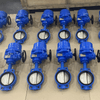
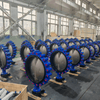
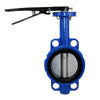
The butterfly valve is the most commonly used type in HVAC cooling systems, especially for large-diameter cooling water main pipelines.
Its main advantages include a compact structure, light weight, and easy installation, along with good cost-effectiveness. In most water systems, butterfly valves can meet the basic requirements for flow control and shut-off, making them a preferred choice in engineering applications.

Gate Valve
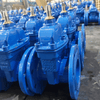
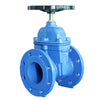
Gate valves are mainly used for system isolation and are commonly installed on main pipeline sections or before and after equipment.
When fully open, the flow passage is nearly unobstructed, resulting in low flow resistance. This makes them suitable for applications that require complete shut-off. However, gate valves are not suitable for flow regulation and are typically used in fully open or fully closed positions.

Check Valve
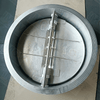
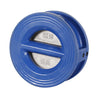
Check valves are typically installed at pump discharge or in critical pipeline locations to prevent backflow.
In HVAC cooling systems, check valves help protect pumps from reverse flow and reduce the impact of water hammer on the piping system, making them an important component for ensuring safe and stable operation.

Balancing Valve / Control Valve
Balancing valves and static balancing valves are mainly used in branch pipelines to regulate and control flow, ensuring balanced operation across different parts of the system.
These valves are typically used in combination with automatic control systems and are common in applications that require precise temperature or flow control.
Ball Valve
Ball valves are usually used in small-diameter pipelines or branch systems where tight sealing is required.
They offer quick opening and closing, along with reliable sealing performance, making them suitable for applications that require fast shut-off.
Common Materials for Valves in HVAC Cooling Systems
In HVAC cooling systems, valves are in continuous contact with water and operate under certain pressure and temperature conditions. Therefore, material selection mainly considers corrosion resistance, strength, and cost.
Common materials can be grouped into three parts: valve body, disc, and sealing materials.
Valve Body Materials
- Ductile iron: The most common choice, offering high strength and low cost, suitable for most standard applications.
- Stainless steel: Used in systems with poor water quality or corrosion risk, providing better corrosion resistance but at a higher cost.
Disc Materials
- Stainless steel (304 / 316): The most widely used option, balancing strength and corrosion resistance.
Sealing Materials
- EPDM: The most commonly used sealing material in HVAC cooling systems, suitable for chilled and cooling water, with stable performance and moderate cost.
- PTFE: Used in higher-temperature water or more corrosive conditions, with higher cost but better chemical resistance.

Key Factors for Valve Selection
In HVAC cooling systems, valve selection should be matched to the actual operating conditions. It must meet system performance requirements while also considering cost efficiency.
The following factors are typically considered:
1.Pressure and Temperature
The working pressure in HVAC cooling systems is usually PN10 or PN16, with temperatures typically ranging from 5–60°C. In most projects, standard valves are sufficient to meet these requirements.
2.Water Quality and Corrosion
- Standard chilled water systems: Ductile iron body with EPDM sealing is commonly used.
- Corrosive or poor water quality conditions: Stainless steel is recommended for better corrosion resistance.
- Glycol or antifreeze solutions: EPDM sealing materials are preferred to ensure stable sealing performance and longer service life.
3.Pipe Size and Installation Location
- Large-diameter main pipelines: Butterfly valves are typically preferred due to their compact design and cost efficiency.
- Isolation points: Gate valves can be used where reliable shut-off is required.
- Small-diameter branches: Valve selection should be based on specific needs, such as ball valves or other control valves.
4.Functional Requirements
- On/off or basic flow control: Butterfly valves
- Reliable shut-off: Gate valves
- Backflow prevention: Check valves
- Precise flow control: Control valves
5.Actuation Method
- Manual valves: Suitable for general piping applications
- Electric actuators: Suitable for automated control systems
In automated systems, it is important to distinguish between on/off and modulating actuators, and match them with the appropriate control signals (such as 0–10V or 4–20mA). For systems with safety requirements, actuators with a spring return function can also be considered.

Valve selection for HVAC cooling systems should be based on actual operating conditions, taking into account pressure, temperature, water quality, and functional requirements to achieve a balance between performance and cost.
As a manufacturer specializing in industrial valves, Union Valve provides a wide range of valve solutions for HVAC cooling systems. Our products are widely used in commercial buildings, industrial cooling systems, and data centers, offering reliable performance across different operating conditions.
If you have a specific project requirement, feel free to contact us for professional selection advice and a fast quotation.
Related Articles:


-
Posted in
Cooling System, HVAC, Valve Selection