 English
How to Select the Right Valves for Pump Stations
Pumps are the core equipment of a pumping station, but the long-term safe and stable operation of a pump station does not depend on the pump itself alone.
Valves installed in the pump station piping system also play an important role in protecting equipment, controlling fluid flow, isolating pipelines, and reducing maintenance difficulties.
Different types of valves serve different functions in a pumping station system. Proper valve selection and configuration can improve operational reliability while reducing long-term maintenance costs.
Why Are Valves Important in Pump Stations?
During the operation of a pump station, several challenges may occur. Different types of valves are designed to address these issues and ensure reliable system performance.
|
Pump Station Issue |
Related Equipment |
Main Function |
|
Reverse flow occurs after pump shutdown |
Check Valve |
Protect the pump impeller and motor by preventing backflow |
|
Equipment requires maintenance |
Gate Valve / Butterfly Valve |
Shut off the flow and isolate the pipeline for safe maintenance |
|
Large-diameter pipeline isolation |
Butterfly Valve |
Provide reliable shut-off and flow control performance |
|
Difficult valve removal or replacement |
Dismantling Joint |
Provide axial adjustment to simplify valve installation, removal, and replacement |
Check Valves: Protect Pumps from Backflow
Check valves are one of the most important protective devices in pump stations. They are typically installed on the pump discharge line to prevent reverse flow after the pump stops.
By using the pressure difference of the medium or the force of an internal spring, the valve disc closes quickly when backflow occurs. This prevents high-pressure water from flowing back and impacting the pump impeller, helping avoid pump reverse rotation and potential equipment damage.
Different types of check valves have different closing mechanisms and performance characteristics. The actual selection should consider:
- Pipe size
- Flow rate and velocity
- Water hammer risk
- Installation space
- System operating requirements
Common Types of Check Valves Used in Pump Stations
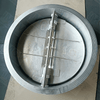
1. Swing Check Valve
Suitable Applications:
Traditional large pump stations, municipal water supply pumping stations, water treatment plants, and large-diameter long-distance water pipelines.
Main Advantages:
Low pressure loss, suitable for large-diameter pipelines, simple structure, and high long-term operating reliability.
Considerations:
Due to the relatively long disc travel, the closing speed is slower compared with other check valves. In high-velocity systems or applications sensitive to water hammer, the actual operating conditions should be carefully evaluated before selection.

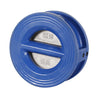
2. Dual Plate Check Valve
Suitable Applications:
Booster pump stations, HVAC pump systems, industrial cooling water systems, and other applications where installation space is limited or frequent start-stop operation is required.
Main Advantages:
Compact design, lightweight construction, fast closing response, and reduced risk of water hammer.
Considerations:
The flow resistance of dual plate check valves is slightly higher than that of swing check valves. Since they use dual discs and spring-assisted closing mechanisms, they are not recommended for wastewater systems containing large solid particles, as debris may cause disc blockage or improper operation.

3. Tilting Disc Check Valve
Suitable Applications:
Large-scale water transmission projects, raw water transfer systems, and extra-large pump stations with sizes above DN1000.
Main Advantages:
Smooth flow passage design, low head loss, and the ability to be equipped with hydraulic dampers or counterweight systems according to project requirements.
Considerations:
Higher manufacturing cost and the installation and commissioning process may require professional guidance.

How to Select a Check Valve for a Pump Station?
|
Operating Condition |
Recommended Check Valve |
Reason |
|
Standard pump stations with stable operation |
Swing Check Valve |
Proven design, low flow resistance, economical, and reliable |
|
Large-diameter water transmission systems |
Swing Check Valve / Tilting Disc Check Valve |
Suitable for high-flow applications |
|
Limited installation space |
Dual Plate Check Valve |
Compact design and shorter face-to-face length |
|
Pump systems with frequent start-stop cycles |
Dual Plate Check Valve |
Fast closing response |
|
Systems sensitive to water hammer |
Dual Plate Check Valve / Tilting Disc Check Valve |
Helps reduce pressure surges |
|
Large-scale projects above DN1000 |
Tilting Disc Check Valve |
Can be equipped with hydraulic damping systems |
Butterfly Valves: Large Diameter Isolation for Pump Stations
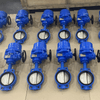
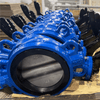
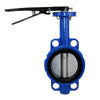
In pump station systems, butterfly valves are mainly used for pipeline isolation and flow control. They are commonly installed on pump discharge lines or large-diameter water transmission pipelines.
For large-diameter applications (DN300 and above) such as municipal water supply, wastewater treatment, and raw water transfer systems, butterfly valves offer several advantages compared with traditional gate valves:
- Compact design
- Lower weight
- Easy operation
- Significant cost advantages for large-diameter applications
Common types include:
-
Double Flanged Butterfly Valve
Suitable for large-diameter pipeline connections, offering excellent stability and pressure resistance. -
Double Offset Butterfly Valve
Uses an offset disc design to reduce sealing wear and improve service life, making it suitable for systems requiring higher reliability and long-term performance.

Gate Valves: Reliable Isolation During Maintenance
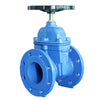
In pump station systems, gate valves are mainly used for complete pipeline shut-off, ensuring that downstream pumps, valves, and other equipment can be safely maintained after the pipeline has been drained.
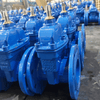
Resilient seated gate valves are commonly used in water system pump stations. Their main features include:
- Full bore design
- Low pressure loss
- Reliable sealing performance
For large-diameter main pipelines (DN350 and above), butterfly valves are often a more economical isolation solution due to their lower weight, smaller installation space, and easier operation.
However, when full bore flow, long-term sealing performance, or specific operating requirements are needed, gate valves still provide advantages that cannot be fully replaced by other valve types.

Dismantling Joints: Simplify Valve Installation and Maintenance
In pump station systems, dismantling joints are mainly used to simplify the installation, removal, and maintenance of valves and equipment.
Large pump stations usually use large-diameter valves, such as butterfly valves, gate valves, and check valves. These components are heavy and often installed in limited spaces. Without sufficient adjustment space, future valve replacement and maintenance can become extremely difficult.
Dismantling joints are typically installed near valves. Through their axial adjustment capability, they can:
- Compensate for installation length variations
- Simplify valve removal and replacement
- Reduce pipeline installation stress
- Shorten maintenance time
For pump station systems with large-diameter valves, limited installation space, or high maintenance requirements, dismantling joints are generally recommended.

Typical Valve Arrangement in Pump Stations

Valves are an essential part of any pump station system. Proper valve configuration not only protects pumping equipment and improves system reliability, but also reduces future maintenance difficulties and operating costs.
Since operating conditions vary from one pump station project to another, there is no standard valve combination suitable for every application. Proper selection requires a comprehensive evaluation of factors such as pipe size, medium characteristics, flow variations, pressure rating, installation space, and maintenance requirements to determine the most suitable valve solution.
As a professional valve manufacturer, Union Valve provides check valves, butterfly valves, gate valves, dismantling joints, and other water system valve products for a wide range of applications, including municipal water supply, water treatment, pump stations, and industrial piping systems.If you have any further questions, please feel free to contact us.
FAQ
Can Butterfly Valves Replace Gate Valves in All Pump Station Applications?
Butterfly valves can replace gate valves in many large-diameter pipeline isolation applications, but they cannot completely replace gate valves, especially in systems requiring full bore flow, long-term sealing performance, or strict bidirectional isolation.
Is a Dismantling Joint Required for Every Pump Station?
Not necessarily. Dismantling joints are especially recommended for systems with large-diameter valves, limited installation space, or high maintenance requirements, as they make valve installation, removal, and replacement easier.
What Types of Valves Are Commonly Used in Pump Stations?
Common valves used in pump stations include check valves, butterfly valves, gate valves, and dismantling joints.
- Check valves prevent reverse flow.
- Butterfly valves and gate valves are used for pipeline isolation.
- Dismantling joints simplify valve installation and maintenance.
Should a Pump Station Use a Swing Check Valve or a Dual Plate Check Valve?
The selection depends on factors such as pipeline size, installation space, flow conditions, and water hammer control requirements.
- Swing check valves are commonly used in large-diameter pipelines because of their low pressure loss, proven design, and high long-term reliability.
- Dual plate check valves are more suitable for applications with limited space or where fast closing is required, especially in systems with frequent pump start-stop cycles.
Related Articles:
- What Is a Signal Butterfly Valve and How Does It Work?
- Butterfly Valves in Hydro Power Plants: Functions and Selection Guide
- Marine Butterfly Valves: Selection Guide for Ship Systems
- How to Select Butterfly Valves for Chilled Water Systems
- What Valves Are Used in HVAC Cooling Systems
- What Valves Are Used in AI Data Center Cooling Systems
- Choosing the Right Butterfly Valve for Seawater Desalination
- How to Choose Fire Protection Butterfly Valves
- How to Choose a Chemical Resistant Butterfly Valve
- Valve Selection for Pump Stations and Water Treatment Plants