 English
Why Water Valves Corrode: Common Issues and Material Choices in Water Systems
In water supply, water treatment, circulating water, and municipal pipeline systems, valves operate continuously and remain in service for long periods. As a result, they are among the components most exposed to corrosion in water systems.
In real-world water systems, valve corrosion rarely leads to sudden failure. Instead, it develops slowly and accumulates during years of operation. Only when corrosion reaches a certain level does it begin to appear as leakage, difficult operation, or loss of sealing performance.
For this reason, understanding the corrosion mechanisms affecting water valves from a practical, application-based perspective—and addressing them during valve selection and manufacturing—is essential to ensuring the long-term reliability and stable operation of water systems.

Common Corrosion Issues in Water Valves
During actual operation in water systems, corrosion in water valves typically manifests in the following forms:
1) Surface corrosion of the valve body
Over long-term service, continuous exposure to water media can cause uniform corrosion on the valve body surface. As wall thickness is gradually reduced, the valve’s structural strength and pressure resistance decline over time.
2) Localized corrosion at sealing areas (pitting and crevice corrosion)
Valve seats, sealing surfaces, and connection areas are prone to forming small gaps or zones where the medium can stagnate. In systems with chlorinated water or frequent water quality fluctuations, pitting and crevice corrosion are more likely to occur, eventually leading to leakage.
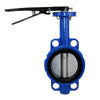
- Butterfly valves: Corrosion often develops at the sealing interface between the disc edge and the seat.
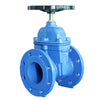
- Gate valves: Issues are more commonly found on the gate sealing surfaces, as well as at the stem, packing gland, and gate connection areas.
3) Deposit-related corrosion and operational sticking
In raw water systems or applications with poor water quality, impurities and solid particles tend to accumulate inside the valve. These deposits not only accelerate corrosion of the metal beneath them but can also directly interfere with valve operation.
- Gate valves: Their internal cavity design makes them more likely to trap media and debris, making them particularly vulnerable to this issue.
- Butterfly valves: When used for throttling in a partially open position over long periods, deposits may also build up on the upstream face of the disc, creating similar risks and leading to increased operating torque or even seizure.
Once these corrosion problems appear, they usually indicate that the valve has entered a stage of performance degradation, requiring more frequent maintenance or eventual replacement.
How Valve Material Selection Impacts Corrosion Resistance
In water systems, the corrosion resistance of a valve is largely determined by its material selection, which directly impacts long-term reliability in service. The following are the key considerations when choosing valve materials:
1) Limitations of base materials
Carbon steel valves: Cost-effective, but prone to general corrosion in water systems with high dissolved oxygen or unstable water quality. As a result, their service life is often limited in long-term water applications.
Standard stainless steels (such as 304): Provide moderate corrosion resistance. However, in chlorinated water, circulating cooling water, or certain industrial water systems, pitting or crevice corrosion may still occur.
2) Targeted use of corrosion-resistant alloys
For more aggressive water conditions—such as high chloride content, acidic water, or seawater—materials with enhanced corrosion resistance are typically selected:
- Stainless steel alloys: Grades such as 316/316L (with added molybdenum for improved resistance to chloride-induced pitting) and duplex stainless steels like 2205, which combine high strength with excellent corrosion resistance.
- Copper alloys: Including bronze and aluminum bronze, commonly used in seawater and specific media due to their strong resistance to seawater corrosion and good anti-fouling properties.
- High-performance corrosion-resistant alloys: Materials such as Hastelloy and titanium are used in extremely corrosive environments, though their higher cost limits their application to critical services.
These materials achieve improved corrosion resistance by optimizing the proportions of elements such as chromium, nickel, molybdenum, and copper, enhancing the stability of the passive film and slowing the corrosion process over time.
3) Material matching for different valve types
-
Butterfly valves:
Particular attention should be given to the material compatibility and corrosion resistance of the disc–seat sealing pair. Proper matching is essential to maintain reliable sealing performance over long-term operation. -
Gate valves:
A more holistic approach is required, considering the corrosion resistance of the valve body, gate, and stem as a complete system. Corrosion of any single component can compromise overall valve performance and lead to premature failure.
4) Core principle of material selection: “adequate and stable”
When selecting materials for water-system valves, the goal is not to pursue the highest possible corrosion resistance by default. Instead, material choices should be based on actual water quality, operating conditions, expected service life, and total life-cycle cost. Selecting materials that provide performance that is adequate and stable for the specific environment helps achieve the best balance between reliability, availability, and economic efficiency.

Key Factors Affecting Water Valve Corrosion
From an operational perspective, corrosion in water valves is rarely caused by a single factor. Instead, it is usually the result of multiple conditions acting together over time:
-
Material composition
The content of alloying elements such as chromium, nickel, molybdenum, and titanium directly affects material stability in oxygenated and chlorinated water environments. -
Water quality
Different types of water—such as chloride-containing water, disinfected water, circulating water, and water with suspended impurities—exert significantly different corrosive effects on valve materials. -
Operating conditions
Long-term operation in a partially open position, frequent opening and closing, and localized changes in flow velocity can all accelerate localized corrosion and wear.
For example, butterfly valves are more susceptible to erosion–corrosion under throttling conditions, while gate valves that remain idle for long periods are more prone to localized stagnation-related corrosion. -
Environmental factors
Although temperature variations and pressure fluctuations in water systems are relatively moderate, their long-term effects can still accelerate material aging and corrosion over time.
How Corrosion Resistance of Water Valves Is Tested
To reduce corrosion risks in real operating conditions, the corrosion resistance of water valves is typically evaluated during the material selection and manufacturing stages.
-
Immersion testing
Material samples are immersed for extended periods in simulated water media to observe corrosion behavior and trends under continuous exposure conditions. -
Salt spray testing
This is a widely used method for simulating corrosive marine or high-chloride environments. It helps assess the corrosion stability of materials when exposed to saline or chloride-rich water conditions.

-
Electrochemical testing
By measuring the electrochemical behavior of materials in electrolyte solutions, these tests provide comparative data on corrosion performance and support material evaluation and selection.
The purpose of these tests is not to pursue extreme laboratory performance, but to identify potential corrosion risks that may arise in real water systems at an early stage. Whether applied to butterfly valves or gate valves, these verification methods serve as important references during the valve selection and manufacturing process.
Within Union Valve’s factory inspection system, corrosion resistance is treated as a key quality control item. Through standardized tests such as salt spray testing, the corrosion stability of valve body materials and surface treatments is strictly verified. This approach ensures consistent quality across production batches and provides a solid foundation for reliable long-term operation in water systems.

In water system engineering, valve corrosion is often a long-term and hidden issue. Once it becomes apparent in the later stages of operation, maintenance costs can be significant, and in some cases, it may even affect continuous water supply and overall system safety.
For this reason, addressing corrosion risks early—during the valve design and selection stages—through appropriate material selection, structural optimization, and necessary corrosion-resistance verification is an effective way to improve both the reliability and economic performance of water systems.
At Union Valve, corrosion resistance is treated as one of the core control criteria in water valve design and manufacturing. Through careful material matching, attention to structural details, and relevant testing prior to delivery, we aim to identify and manage potential corrosion risks before the valves enter service. This approach helps enhance long-term operational reliability and provides a more predictable foundation for the stable operation of water systems.
If you have any further questions, please feel free to contact us.
Related Articles:
- Valve Selection for Pump Stations and Water Treatment Plants
- Choosing the Right Butterfly Valve for Seawater Desalination
- Selection of Butterfly Valve Materials in Different Media Environments
- Choosing the Right Valves for Efficient Water Supply Systems
- Essential Butterfly Valve Knowledge: Do You Know All of These?
-
Posted in
Valve Corrosion, Valve Materials, Water System